Fujiko Fujio A
Tracing the Roots of an Artist’s Career
Now one of the most popular manga artists alive, Eiichiro Oda got his start by reading the works of megahit artist duo Fujiko Fujio. This interview between Oda and one half of Fujiko Fujio reveals the genesis of Oda’s career as a manga artist and some surprising commonalities between two men whose passion for the form brought them great success!
Moderator: For this second installment, at Oda Sensei’s request, we’ve got another giant of the field here for an interview!
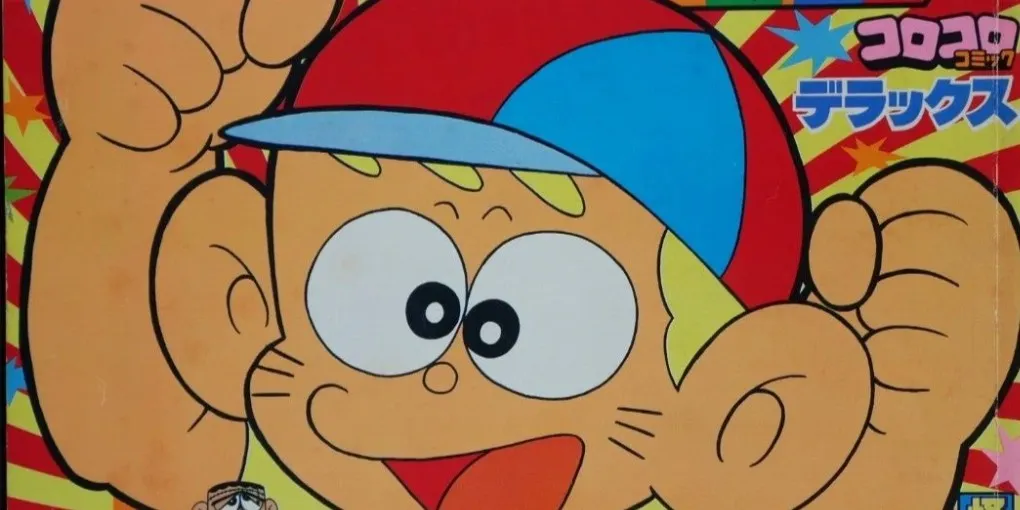
Oda: Yes, I’m so excited! I was a little kid right during the heyday of Fujiko Fujio, and they were so ubiquitous that I thought every manga out there was drawn by some person named Fujiko Fujio. In fact, the very first manga I ever read was Kaibutsu-kun (Little Monster).
Fujiko A: Oh, I see. I’m very happy to hear that.
Oda: I’d never thought of Fujiko Fujio as being a pair of artists, so just for this interview, I looked up who drew which manga, and it turns out I’m most definitely an Abiko fan.
Fujiko A: Well, thank you. (laughs)
Oda: And what drew me to it was the battle elements, which is something you find in most shonen manga now. I think it was having this powerful hero in Kaibutsu-kun, who you knew would beat the bad guys somehow, that kept me interested.
Fujiko A: I see. Speaking of our work as a duo, for several years after we started up, we lived and drew together. You couldn’t tell the difference in our art styles, and we had similar tastes; we both wanted to do sci-fi stories, for example.
Fujiko A: I would draw one panel and hand the page over to Fujimoto to continue, until gradually, our touch with the pen began to differ.
Oda: How so?
Fujiko A: Fujimoto was so delicate and so careful with his art, but I would put all my strength into it, with stress in certain places and less in others, until they really started to look different. So we decided that after Oba-Q (Q-taro the Ghost) we would each draw our own series separately.
Oda: And when you began drawing series separately, you didn’t think of changing to individual pen names?
Fujiko A: We didn’t really feel the necessity. Even if we weren’t drawing them together, we were still dedicated to the same direction in our work, and readers still accepted them as the products of “Fujiko Fujio,” so it worked for us.
Oda: And I was one of those readers. Whether it was the heartwarming stuff or the battle scenes, it all felt like Fujiko Fujio to me.
Moderator: What was your impression of Oda Sensei’s work?
Fujiko A: There’s a fantastic energy to it. It really keeps you wanting more.
Oda: Shonen manga these days has a lot of blood and other depictions of violence. How do you feel about this?
Fujiko A: Those of us in the older generation always felt an innate standard an unseen line that we shouldn’t pass, “I can’t push it any further than this!” But it seems to me like your manga completely surpasses that framework. It’s like you’ve got that ideal flow, where you draw what you want and the readers enjoy it.
Oda: Oh goodness, I think I could die happy, hearing that. Naturally, I understand I should draw “something that readers will love” or I should check myself to make sure I fit “what society should see,” but ultimately, I just can’t fully draw something that I don’t want to draw.
Fujiko A: I’m sure. I never drew anything by calculating the response of readers. I just thought of things that I wanted to read and no one was drawing, so I said “All right! I’ll do it myself!” I always kept the mindset that I was my first and most enthusiastic reader. I think that’s something that you and I share, Oda Sensei.
Oda: Wow… that’s fantastic. I’m so happy to hear that.
Moderator: I’d like to ask the both of you what gave you the idea to be an artist?
Oda: When I was a kid and I learned that “drawing manga” was an actual job, I decided, “I’m going to draw manga when I grow up!”
Fujiko A: When you were primary school age?
Oda: No, this would be about kindergarten.
Fujiko A: Wow, that’s really something.
Oda: Until then, I thought grown-ups just put on suits and went to the office for work. I thought, “Great, I can just draw all day!” And that’s when I decided that I was going to be a manga artist.
Fujiko A: And what sort of manga would you draw at the time?
Oda: No manga, I would just try to copy pictures and things. I basically thought, “I can draw Kaibutsu-kun really well, so I can be a manga artist.”
Fujiko A: I see (laughs). About how old were you when you first started drawing actual comics?
Oda: It was around elementary or middle school that I actually started working on things with a story, but they were all just copies of other stories. The first proper manga I drew with its own story was actually the one that won me a Tezuka Award. I was seventeen then.
Fujiko A: High school, then.
Oda: Until that moment, I just thought: “If your art is good, you can be a manga artist.” But once I started experimenting with putting together a real comic, I began to understand the ins and outs of creating a story.
Fujiko A: I met Fujimoto, and we were both drawing manga in the hopes of being like Osamu Tezuka. We moved to Tokyo when I was nineteen. We lived in an apartment building called Tokiwa-so along with other artists like Shotaro Ishinomori and Fujio Akatsuka, drawing manga under the same roof.
Oda: I read about that in Manga Michi! Wow!!
Fujiko A: You could be drawing manga in the middle of the night and go out into the hallway, and all the other bedrooms had the lights on. Then you’d think, “Everyone else is still working, I can’t sleep yet!” It was like the Sengoku era for manga, a time when the future of manga was wide open, and anyone could make his mark on it.
Oda: When I was working as an assistant my coworkers played that role. We talked about manga all the time.
Fujiko A: It’s always great to be around people who are competing with the same goal in mind.
Oda: Isn’t it true that when you’re struggling, you don’t want to hear someone who’s already got it made tell you, “Hang in there?” It cheers you up a lot more to hear someone in the same position say, “It’s tough for me too.” (laughs)
Moderator: What did you talk about with your fellow assistants, Oda Sensei?
Oda: Nothing but manga. I’m not sure if readers would be able to follow along, but I really love talking about manga! We were all young at the time, but we were so into manga that it was more fun to talk about that than, say, girls, or something.
Fujiko A: How many of you were there?
Oda: About five. Once we finished work, we’d all meet up and hang out.
Fujiko A: That’s good. It must have been a very focused time in your life. And you all had different ideas about what manga you wanted to make, right?
Oda: Yes. But we all had that yearning for the kind of fierce personal development that happened at Tokiwa-so Manga Michi is our bible, after all.
Moderator: I’d like to ask how the both of you schedule yourselves and go about creating your works.
Fujiko A: Are you a fast drawer, Oda Sensei?
Oda: I can draw quickly, but it takes me time to think of the story.
Fujiko A: So once you get into production, you stick to a fast pace.
Oda: That’s right. Once forming the chapter is complete, I’m filled with this strange confidence that I know I can meet the deadline. Of course, I still end up going right up to the last possible moment, which causes trouble for my editors.
Fujiko A: We have to meet our deadlines, of course, but I’ve never liked handing over a completed chapter to an editor days before the time limit.
Oda: I knew that feeling!
Fujiko A: Going right up against the limit fills you with this strange creative energy.
Oda: And if you turn it in early, it makes you wonder, “Did I really use all the effort that I could have?” (laughs)
Fujiko A: I did that myself, even at my busiest. “Never drop a chapter”, so at some point, I changed my process. Until then, I’d hammer out a draft or sketch in an idea notebook, but I stopped doing that. I started just inking out pages completely from scratch, improvising like a jazz musician as I went along. Instead of just tracing a finished draft, I come up with the most stunning and surprising ideas in the process.
Oda: That’s incredible in the long-term view, I don’t decide much before I draw, but it usually works out anyway, so I think I understand what you mean. I don’t have the confidence to do that every week, though.
Oda: But I enjoy it so much, I can’t think of drawing manga as my job. Sometimes I wonder if it’s okay to be an adult and just hang around having fun all the time. (laughs)
Fujiko A: Yes, I don’t think of being a manga artist as my job. When I fill out the “occupation” field of a form, I’ve never once written down “manga artist.”
Oda: What do you write?
Fujiko A: I take out the “manga” part and just put down “artist” or “designer.” (laughs) I want to keep feeling the emotion of the time when just drawing manga was fun, so I try not to think of this as my job.
Oda: It’s amazing that you can maintain such a stance for so long.
Fujiko A: It’s been so long, I get all philosophical about it. (laughs)
Oda: So you’re not going to draw a shonen manga again?
Fujiko A: I feel like shonen manga these days is the most difficult genre to draw. I don’t understand the taste of kids anymore. It’s more fun to draw for readers that are closer to my age. I’d like to draw a manga aimed at seniors, something that old guys in their sixties and seventies would read and enjoy. The analog generation was raised on manga, after all.
Oda: It seems like for the time being manga won’t stop being read on paper, though. I’ve seen manga you can read on the computer, but it’s so hard to get into. It’s that warmth of the paper in your hands that keeps people glued to the book format.
Fujiko A: Do you use a computer when you draw?
Oda: I could if I wanted, but it just feels cold. I like coloring by hand rather than using a computer. I think that stuff comes across to readers too.
Fujiko A: That’s right. I think manga should continue to be the only artistic medium in which you can truly feel temperature.
Moderator: Let’s round up with encouragements for one another!
Oda: I’m looking forward to your future works! I really see now that you won’t reach the readers if you don’t draw what you like. I know you were talking about not drawing shonen manga anymore, but I sincerely hope you continue to draw things that you enjoy!
Fujiko A: After talking with you today, I can see that you have much more enthusiasm for manga than I had imagined. I hope you keep it up and maintain that level of enjoyment in your creations! Best of luck!