Takashi Yanase
Manga artists find understanding across the generational gap, and speak their minds on each other’s work…
Eiichiro Oda gets to interview Takashi Yanase
Born in Kochi Prefecture, 1919. He worked as a graphic designer in the Mitsukoshi publicity department until he quit to become a freelance mangaka. For three years starting in 1964, he was a teacher on NHK's TV program Manga School. He began drawing illustrated storybooks in the late 1960s, and debuted the Anpanman series in 1973., a creator who commands his eternal respect and admiration. Here we have a special chat between two men whose characters have become national icons that speak to people of all ages. What surprising things do two artists who were born a half century apart have in common?
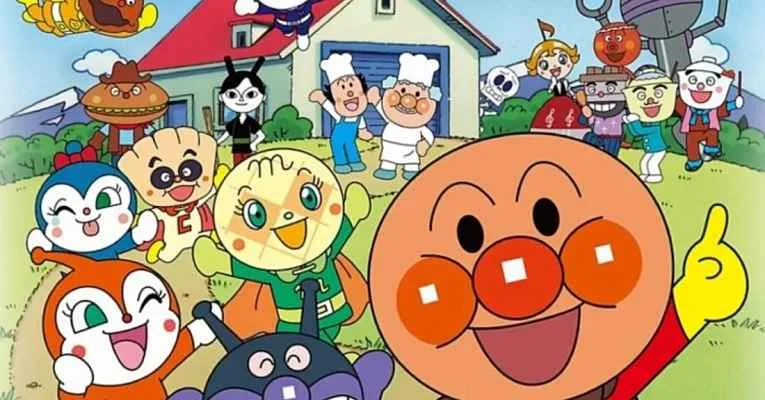
Moderator: We’ve got a dream-come-true interview here between Oda Sensei and the creator of Anpanman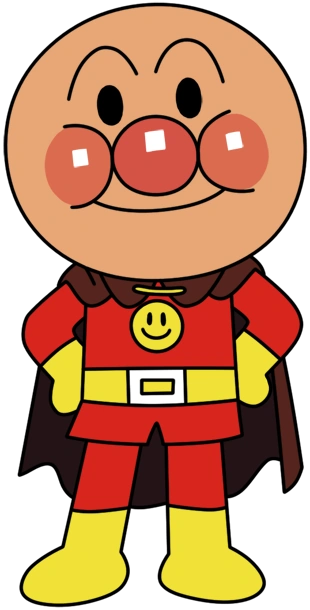 An extremely popular children's story that's been published since 1973. A televised animated series began in October 1988, bringing even greater recognition to the lovable series and its many charming characters. The hero, Anpanman, has a face made of bread with sweet bean paste inside (anpan) that was baked with juice from the “flower of courage.” He helps the starving by giving them part of his face to eat. When he gets dirty or wet, he loses his strength., Yanase Sensei!
Oda: I’m overjoyed to meet you! It’s fascinating to get to speak with the man who drew the storybooks I loved as a little kid. When I look at The White HorseA children's storybook published in 1976. It's a story about the fantastical events of a single night. A boy sees a white horse jump out of a painting at home and goes chasing after it. Wherever the white horse goes, plants turn green and lush, the snow melts, and flowers bloom. Of the many books Yanase Sensei has created, this is one of Oda Sensei's favorites. now, the art strikes me as almost indescribable in the way it bewitches the reader.
Yanase: Thank you very much.
Oda: Also, I’ve got a little baby now who just loves Anpanman. The baby doesn’t care about any of my One Piece merchandise, but any kind of Anpanman item gets a huge reaction. What is the foundation for this incredible reaction you get out of babies and children?
Yanase: I’ve been drawing this stuff for years and years, and even I don’t understand it.
Oda: Do you suppose it’s because kids feel a kind of security from circular shapes, like Anpanman’s face? Or maybe it’s because he’s always smiling.
Yanase: I suppose that’s part of it. But the one thing I can say for certain is that at the time, the adults all hated it; it was only young children who took to my creation. At first, Anpanman was just in illustrated storybooks, but the publisher said, “Don’t draw this anymore,” and others around me said, “Kids these days won’t like it.” The reaction was terrible. Even I started to agree — I was losing confidence — but then I saw the kids were fighting to be first to read it. That was wonderful, and even better was that the children who didn’t even know words yet were drawn to it. Kids too young even for kindergarten determine what they like and dislike through instinct alone. The reputation of the artist and the opinions of other people don’t matter at all to them. It was a case where I realized what a difficult audience the youngest of children can be, and how hard trying to draw stories that they might enjoy is.
Oda: And it requires the creator to give his utmost effort too.
Yanase: Drawing for young children means you’re fighting to capture a new audience every year, an audience that knows nothing about me or even Hans Christian AndersenHans Christian Andersen, a world-famous Danish writer of fairy tales from the 19th century. He wrote many famous stories, such as “The Emperor's New Clothes,” “The Little Mermaid,” “The Little Match Girl,” and “The Ugly Duckling.” Many of these stories are deeply popular in Japan as wel. Anpanman has been an anime for over twenty years, and it’s burned its way into several generations’ consciousnesses, but the toddlers don’t care about that. I’m basically always a brand new no-name to them.
Oda: Wow! That’s really incredible to me. I was just thinking that you seem far too lively to be over ninety years old, but I feel like I’m starting to understand why that is.
Oda: I was in second grade when I first read an Anpanman book. I remember being shocked at the idea that others would eat his face so that he got smaller and smaller.
Yanase: Everyone seems to have a great reaction to that particular idea.
Oda: But what was even more shocking to me was that Anpanman’s story was given birth by your wartime experiences. I didn’t learn that until I was an adult.
Yanase: It’s true. I’ll be 91 this year, so I was a soldier in the last warRefers to both the Second Sino-Japanese War, starting in 1937, and World War II, beginning in 1941. Yanase Sensei was conscripted and sent to China, where he was a signaler and radio codebreaker.. We were sent out there with the message, “We’re fighting for the right cause,” but when we lost, things flipped around, and suddenly we were the bad guys. So I felt, “The justice that a nation advocates is hard to believe in.” If the one who wins the fight is the one who’s “right,” then you don’t know who is arguing for the proper truth. So I wondered what true, unassailable good would look like. And the answer I landed upon was, “The side that feeds the starving.” During the war, the hardest thing of all was not having food to eat, and no matter where you go, no one will argue that feeding the hungry isn’t right. So I thought it would be cool to create a hero whose mission is to feed hungry people. Also, superhero stories were big at the time, but I thought they were a bit too show-offy.
Oda: What do you mean?
Yanase: Well, to my mind, I don’t think people can claim to be performing righteous acts without undergoing pain themselves. If a child is drowning in the river, I think true heroism would be the urge to jump in, even if you can’t swim either. I felt like those heroes who would vanquish evil without getting a single speck of dust on themselves were just a little too cool. So I drew a hero who was a little less superhuman, someone who offered his own face to starving people. That’s what Anpanman is to me.
Oda: I used to think that it was a story meant entirely for children, but hearing that now, I’m more fascinated by it than ever. I feel like adults can enjoy Anpanman too, once they understand the true theme of the story.
Oda: Your reason for the creation of Baikinman is really deep too.
Yanase: The thing about germs (baikin) is, we grapple with them from birth to death. But you shouldn’t simply try to eliminate them altogether. People who are raised in sterilized rooms can’t go outside, or they’ll simply die. Fighting germs gives your body the right balance of antibodies. It’s what makes you healthy.
Oda: Ah, I see.
Yanase: That’s why Baikinman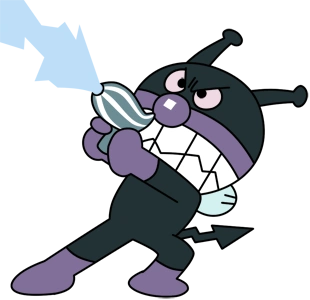 Baikinman is Anpanman's eternal rival. He's an evil ruffian from the planet of germs. His eternal mission is to defeat Anpanman once and for all, but he can never overcome the powerful An-punch. Baikinman is a skilled inventor and rides around on his own vehicles, causing trouble. At the time the animated series began, Yanase Sensei said, “If we can't find a voice actor who can get Baikinman right, I'll play the role myself.” As you can see, he’s clearly a character who is close to the author’s heart. and Anpanman are eternally fighting one another, and will never die. He’ll get thrown out, and then show up again next week like nothing ever happened, ready to do evil again.
Oda: That’s quite a story. You’ve perfectly explained why it is that they’re fighting. It’s not just Anpanman — all the characters have a firm background to their stories. It’s very deep.
Moderator: Yanase Sensei, you’re in the Guinness Book of World Records for the animated
series with the most charactersOn June 24, 2009, Soreike! Anpanman was recognized by the Guinness Book of World Records for being the animated TV series with the greatest number of characters. The number of characters recognized in the award was 1,768, but the number Yanase Sensei designed for the series is actually over 2,200.. How do you create so many characters?
Yanase: They come both ways — some are based on ideas I had, and some are from the anime staff. But I always take that idea and turn it into my own character.
Oda: You wouldn’t have that consistency otherwise..
Yanase: That’s right. But let’s talk about you, Mr. Oda. Your characters are fabulous. I love the name “Usopp” — it’s got that fairy-tale touch and tells you the author is well-educated.
Oda: Oh my gosh, thank you. I’m very honored.
Moderator: You touched on it a bit earlier, but I’d like to hear your thoughts on Oda Sensei’s work, Yanase Sensei.
Yanase: Since I joined the world of manga, I’ve been shocked by the work of other people on many occasions. Osamu TezukaOsamu Tezuka, born in 1928. The presiding figure over the manga world after World War II, he is known as the 'God of Manga.', Sanpei Shirato
Sanpei Shirato, born in 1932. He drew many ninja stories and was a central figure in the development of gekiga (dramatic art), and more recently Naoki Urasawa
Naoki Urasawa, born in 1960, is one of the most prominent mangaka today. After drawing the hit girls' judo manga Yawara!, he moved on to celebrated stories such as the mystery thrillers Monster and 20th Century Boys, as well as Pluto, a remake of Astro Boy.
and
Kentaro MiuraKentaro Miura, born in 1966. His signature series, Berserk, is an epic dark fantasy that is wildly popular both in Japan and the rest of the world. — all these artists have stunned me at times. And now you are one of them. The way you express emotion, the huge reactions you give your characters — it really feels like “This is manga!” Also, you think you know what’s going to happen as you read, and then your expectations are shattered in the best way possible.
Oda: Thank you. It’s a weekly manga, so I always try to include one big surprise for the readers each week. After they spend a week wondering, “Is this going to happen?” I want to show them something way more exciting than what they were imagining.
Yanase: You know, there’s the ship with all the cooks on it. The part where the front popped off and turned into a ship of its own was really a great surprise.
Oda: Wow, you picked that part? I was not expecting to hear that brought up. (laughs)
Yanase: Honestly, I’m glad that I wasn’t in your generation. I’d have a tough time matching you.
Oda: Oh, don’t be silly.
Oda: I love your book Chirin's BellChirin's Bell, a storybook published in 1978. Chirin's mother was eaten by a wolf, and in his quest for revenge he agrees to be the wolf's apprentice. After he grows into something neither sheep nor wolf, Chirin finally defeats the wolf one night and fulfills his revenge. But the only thing that awaits him after this was true loneliness. It was also made into a controversial animated film., but it has a really shocking ending, doesn’t it? After the lamb gets revenge, it loses its place in the world.
Yanase: At the time I drew that book, I was really on a spaghetti western kick. So I wanted to create a storybook with that sort of vibe. I wrote the ending that way because it was necessary to include the message that when you complete your revenge, all that’s left is a cold and barren feeling. I suppose it’s one of the harshest of my stories.
Oda: Since it’s meant for children, I would assume that you had the option of writing a happy ending, but at the time, I was shocked. I couldn’t understand it.
Yanase: Later, that one got turned into an animated movie, and it was quite a tough process. Ever since I took part in Osamu Tezuka’s A Thousand & One Nights movie, I helped with a few different anime, but at the end I just had to say, “No more!” and stopped getting involved. It’s difficult because in order to make something you really want to see, you have to battle against your staff all the time. You might need to just totally overpower them and break them, but as I got older, I got softer in that regard. I couldn’t bring myself to push people around. Plus, I had other work going at the time, and I just didn’t have the stamina to manage both.
Oda: Believe me, I understand that. (laughs)
Yanase: But once Anpanman started, I got involved in the anime again. And in the end, no matter how it turns out, I always end up saying, “Maybe we should have done this instead.” I hear you recently made your own animated filmRefers to the tenth One Piece theatrical animated film, Strong World, which Oda was production supervisor in 2009. He devised the story, designed costumes and creatures, and various other tasks, while simultaneously drawing a weekly serial. He drew over 100 pages of designs for the movie., is that correct?
Oda: Yes. In my case, I got started on it because I was asked to, but once I got started, I just kept making demands until I was satisfied with it. It was very hard for both me and the staff, but if you’re going to change something, you have to indicate how you want it to be different. In the end, the movie was good, so I think it worked out.
Oda: Changing the subject, what do you use when you paint?
Yanase: I used to go with acrylics, but lately it’s been all watercolor. It feels like I’ve gone back to middle school.
Oda: Oh, I get that! You don’t use a computer, do you?
Yanase: My assistants do, but I’m all by hand.
Oda: It’s much better that way! I always want good artists to draw by hand. You don’t get the fine brush movement and detailed nuances in the digital format yet, and I just don’t like the idea that you can put your soul into a drawing and not have anything physical to show for it. So I hope you keep drawing by hand, and preserve that flavor that only you can create.
Moderator: Yanase Sensei, you’ve produced a wide variety of work over your career, and you’re still going strong after age 90. Is there some secret to your longevity?
Yanase: It’s stamina! Once I reached my 80s, I found there were limits to what I could keep doing, but health is the key to everything. Also, you can’t stress yourself too much about any one thing.
Oda: I’m the kind of person who works too hard trying to make his story entertaining. Do you suppose I should learn how to relax a bit more?
Yanase: The thing is — and this is true for sports as well — the more you clench your teeth and get desperate, the more that misery seeps out in the finished result. And the readers aren’t going to feel entertained if they sense it. But your manga is fine in that regard, because you’re clearly having so much fun drawing it! You never see people who enjoy their job this much. So don’t worry, and keep doing what you’re doing.
Oda: I’m very glad to hear that. I feel like I’ve just gotten a boost of motivation.
Moderator: Let’s finish this chat with encouragements for one another!
Oda: I read in a book that human beings have the physical potential to live until age 140. So I think we’ve got a good fifty years left of Anpanman from you. (laughs) I’m really looking forward to whatever you have coming next, as a big personal fan of yours.
Yanase: You won’t get that long out of me (laughs). You’re at the peak of the Japanese comic scene right now, and I hope that soon you’ll be at the global peak. I think you’ve absolutely got the potential for it. So show them what you’ve got!