Jusaburo Tsujimura
The burning souls of creators is passed between generations
On his search of a variety of character models, Oda Sensei came across the legendary puppet maker Jusaburo Tsujimura, and now they meet at last. Learn about the secrets of his unique creative process, look behind the scenes of the Shin Hakenden puppet show, and see how he’s kept himself active after so many years!
Moderator: It was from Oda Sensei’s fervent request that this interview came about, so let’s get right to it!
Oda: I’m very happy to be here.
Tsujimura: But this isn’t the first time, right? We’ve met at one of my exhibitions, perhaps?
Oda: Actually, this is the first time. I’m thirty-eight right now, born in 1975. So as a matter of fact, I wasn’t able to watch the puppet shows you did with NHK, Shin Hakkenden in 1973 and Sanada Juyushi in 1975, when they aired.
Tsujimura: Oh, I see.
Oda: It’s actually very frustrating. Because to tell this story in order, I didn’t even know about you until I was an adult. Just after I turned twenty, I was really focused on finding good reference materials of new and different modeled characters to draw. As I was looking for new shapes, new ideas, I found a book called Puppet Shows of the World at a used bookstore. As soon as I saw it, I realized how incredible the detail is on puppet show models. I started looking into puppets and dolls from the Czech Republic, Russia, and all over the world, and eventually I learned that there was an incredible artist here in Japan. And that was you, Mr. Tsujimura.
Tsujimura: Well, that’s one way to find out about people.
Oda: So really, it’s like I went backward to find you. At the time, whenever I found a new doll or puppet, I would draw it over and over in my notebook, trying to incorporate it into my own head. I was obsessed with them.
Tsujimura: My goodness. Well, I was never good at anything but making dolls and puppets… so I got to where I am by being useless, as a matter of fact.
Oda: Oh, I’m sure that’s not true.
Tsujimura: My father was born in the Meiji period (before 1912), so he was very old-fashioned. When I was old enough to start walking, he put three objects in the corners of the room: an abacus, a brush, and a toy. They said that whichever you walked toward would tell you something about the direction of your life ahead. Well, one of the toys he placed down was a doll, and apparently that was what I picked up. (laughs)
Oda: I suppose you had found your way in life, even from early childhood.
Tsujimura: If you picked the abacus, you’d be a merchant; if you picked the brush, a scholar. And if you picked a toy, you’d be active in the arts, which was basically saying you were doomed. We were still at war when I was a child, so if you were a boy making dolls, they said you weren’t even a true citizen. So ever since I was a child, I had this idea in my head that I might be a hopeless waste of a human being. I would draw flowers on old newspapers and other used-up things to turn them into something else, make them attractive. That was the root of my personal creativity.
Oda: So you turned everything around you into a puppet or a toy of some kind.
Tsujimura: I’d use orange peels or leftover fish bones. Just combine them to make things. It really upset my parents, I think. They put the needle and thread and scissors somewhere I couldn’t reach, but I would make things anyway.
Oda: You were really passionate about it.
Tsujimura: So basically, from the moment I could think to about the age of 20, I was making dolls and puppets as a hobby.
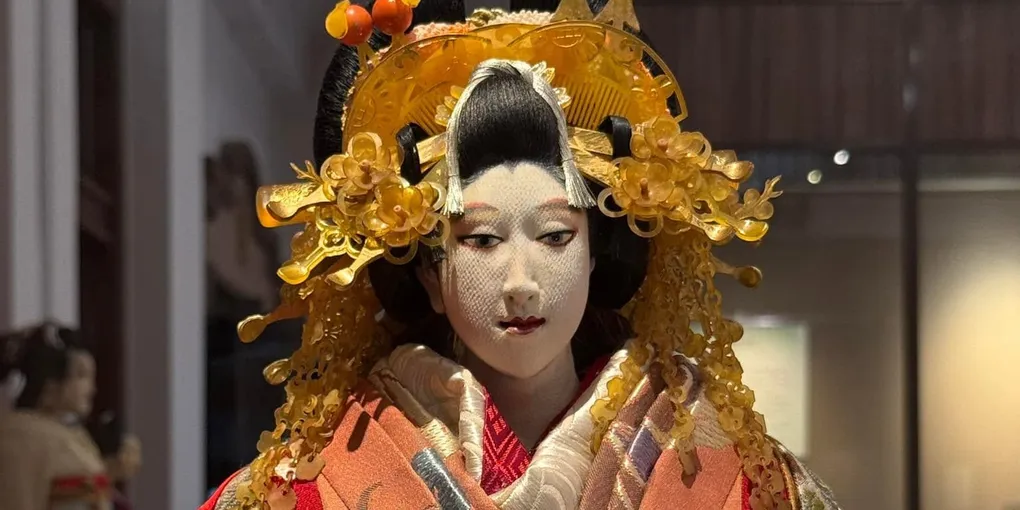
Oda: What surprised me the most was the way you make your puppets. Especially the texture of the skin — it looks like actual human skin. I’m not sure how it all works out chronologically, but compared to other famous puppet makers like Jun’ichi Nakahara and Kihachiro Kawamoto, your style is completely different.
Tsujimura: Mr. Nakahara was a bit before my time. But it was by seeing his work that I began to incorporate my ideas into serious puppet-making.
Oda: What kind of materials would he use to make his puppets?
Tsujimura: His style was based on the way they did it in France. He used a thin fabric called Georgette on the outside to create his texture. Mr. Kawamoto would use animal hide, stripped very thin, to cover the exterior.
Oda: What kind of hide?
Tsujimura: I think it was probably pigskin. He would make it so the mouths could move, and the eyes could be switched out. He was very good at making puppets with little mechanisms and tricks like that.
Oda: What material do you use on yours?
Tsujimura: I use chirimen.
Oda: The woven fabric that’s on the rougher side.
Tsujimura: That’s right. Stretching it over the exterior of the puppet is called chirimen-bori. I brought that technique over from kabuki theater.
Oda: Is that so!
Tsujimura: When I was young, I worked for a company that made kabuki tools and props for three years, and that’s where I learned it. You see, if you use that rougher chirimen surface on the back of kabuki masks or props like sake jars, they’re less likely to slip and come loose. So I used that technique in making puppets.
Oda: I’ve seen my share of puppets from various artists, but you’re the only one who gets this kind of skin texture. Even when I saw a full-page photo of a close-up on the puppet’s face, it was still bursting with detail.
Tsujimura: Trust me, I wasn’t trying to do something like that from the start. Once they started getting used for photographs and film, that’s when people were making a big deal about it.
Oda: Beyond the skin texture, what I like more than anything else is the shape of your faces. It’s a look that belongs only to you.
Tsujimura: I’ve always tried to do that. Whenever I create a person or a historical figure for my story, I always have to add something of my own, to turn them into a different character.
Oda: There was a part in your book that really threw me for a loop. You said, “The closer you try to get to being human, the less human it becomes. And when you make something that isn’t human, it exudes humanity all on its own.” I found that to be very profound.
Tsujimura: Yes. Creating puppets means embracing distortion and caricature.
Oda: In that sense, I feel like CG is the modern equivalent of puppet-making. I’ve never done it, so I wouldn’t know for sure, but it’s like creating a puppet model, just on a computer screen. Things get more realistic all the time, but the closer you get to the real thing, the more alien it seems. It reminded me of that.
Tsujimura: You can’t try to make them just like a human. You need to work at it until you’ve created a certain character image in your head, then give that idea shape.
Oda: I’d like to ask about your puppet show, Shin Hakkenden. It’s a terrible shame that there’s no surviving footage of it now, so it’s almost impossible to see anymore.
Tsujimura: When we were making the show, everyone was so absorbed in the process that we didn’t have time to worry about details like preservation. When they decided we were going to make a movie, we moved all the puppets to Toho’s studio to film, which was quite an experience. I remember that when we had a scene of a character jumping down onto the deck of a ship, we dropped the puppet all the way from the roof of the studio. And you can actually see the hand catching the puppet in the take.
Oda: Ah, all the little rough edges (laughs). But that has its own flavor, doesn’t it? How many puppets did you create in total?
Tsujimura: Including assistants, we had about four or five people who created around four hundred puppets over a period of two years.
Oda: That’s incredible. Were they all made the same way as this one you have here?
Tsujimura: No, the puppets in Shin Hakkenden started out with a mold created from sculpted oil clay. These are more ornamental puppets, where you stuff the fabric head part with wood wool until it’s firm.
Oda: Does using oil clay make the process faster?
Tsujimura: It’s about the same.
Oda: I see. Four hundred at that high level of quality? It’s just incredible. When you had that many, did you run into problems with their designs or faces looking too similar?
Tsujimura: Oddly, we dind’t. Shin Hakkenden in particular was made to be like a kabuki play, so the different character roles had their own kimonos and hairstyles, so none of them ended up being exactly the same.
Oda: Some of it is from incorporating the aesthetic of the formal kabuki style, but I couldn’t help but admire how coolness just exudes from every bit of the puppets. I want to find a way to mimic the profiles of their upper halves, but it’s very difficult. I recently introduced a character in my manga that I drew based on your own style, but the readers said my art had “gotten ugly.” That was a real shock to my system. (laughs)
Tsujimura: It didn’t work out?
Oda: I want to experiment with different character models, but whether the audience likes them or not is a different matter. Personally, I feel like the definition of “coolness” for a character is too limited. They all look too similar, being slender with big eyes. I want to make characters who are cool but don’t look like that.
Tsujimura: They all look the same. Why is that?
Oda: I thought it was so strange. So that’s why I’m looking for all kinds of art for inspiration, trying to find a way to expand the possibilities.
Oda: Nowadays they’re making more and more figures of manga and anime characters. What do you think of them?
Tsujimura: I think it’s a very good thing. You see them even when you go overseas. It’s a boom period for figures, dolls, puppets, whatever you want to call them. Even with CG. In my day, people didn’t care for what we were doing, so having the art recognized by society like this is a wonderful thing.
Oda: You can’t mass-produce these puppets here, can you?
Tsujimura: I don’t think so. I make the exteriors and weave the hair. All by myself. And the hairstyle and color of kimono changes depending on what kind of person it is. You can’t have a princess and a girl from the town looking the same. So that’s the creative process I use to fashion each one.
Oda: And when I draw, I don’t know about any of that stuff. Wow, now I don’t want anyone to see my “traditional” style illustrations.
Tsujimura: Well, you can’t be impatient. You just have to learn it over time.
Oda: It’s all so deep, that’s why. I’ll study as much as I can.
Tsujimura: But the thing is, what you folks are drawing is really today’s ukiyo-e. Japan has all of this culture that only exists here. I happen to think that it’s the traditional culture, the really old things, that are truly fresh and long-lasting. The newer something is, the quicker it gets old.
Oda: I completely understand and agree with that.
Oda: I was hoping to try to figure out just a bit of how it is you’re able to create these dolls and puppets, but I don’t think I’ve succeeded.(laughs). All that I know is that it’s something that requires a whole lot of experience in various aspects.
Tsujimura: I suppose I was gifted with good luck. Some kind of invisible thread that guided me along. But I don’t really know how to put that into words. Still, even though I’ve been making puppets for so long, I find it enjoyable every time I do it. So as long as you’re enjoying creating
your manga, I think you’ll be able to keep at it for a long time.
Oda: I see. The problem is, my stamina isn’t the same as it used to be.
Tsujimura: You can’t help that. People get older. But that just shows how far you’ve gone. And before you know it, you’ll be over the hill.
Oda: (laughs)
Tsujimura: But there’s something I say a lot these days. You’ve already experienced today, but tomorrow will be a brand-new experience in your life. So don’t live it the same way you did yesterday! Do just one thing you haven’t done before. Difficult things—you won’t last more than three days, so just start with something simple and new. That way, something different will happen to you every day.
Oda: At what age did you start this practice?
Tsujimura: Since I was about sixty-five. And that’s why the way I make puppets has evolved just a bit. I’ll be teaching my students, and they’ll say “Sensei, that’s not how you showed us before.”
Oda: I’ve felt that! When I read all these books, I sometimes find that I have different answers to the same questions. It’s all connecting in my head.
Tsujimura: As long as you keep yourself moving and trying things every day, you’ll hit upon that desire to create more and more.
Oda: I hope to follow that example.
Moderator: Any final words of encouragement?
Tsujimura: I’m very grateful to get the chance to speak with a young man like yourself. The world is going to keep changing and evolving in ways that we can’t even believe today, isn’t it? Things will get more and more digital, and that’s why I hope you keep working with ink and paper, doing things the analog way. I hope that style sticks around.
Oda: I completely agree. I want to keep working with pen and paper.