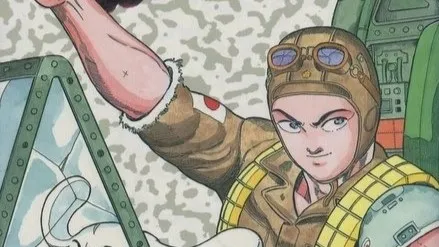
Masaya Tokuhiro
A passion for manga that unites teacher and student!
A conversation between Eiichiro Oda and the manga artist he considers his mentor, Masaya Tokuhiro! We’ll hear Tokuhiro Sensei describe his pupil as a young artist brimming with ambition to be great. Eiichiro Oda says he “learned much and absorbed many things.” What exactly was the professional spirit he inherited from his mentor?!
Moderator: This time, we’ve invited Oda Sensei’s mentor, Masaya Tokuhiro Sensei, for a little chat!
Oda: It’s so good to see you again after all this time. I think it’s been about twenty years since we last met in person. You really haven’t changed since then.
Tokuhiro: I haven’t changed at all.
Oda: We were exchanging some emails after this interview was arranged, and you said the most awful thing (laughs). You said, “Because you were my assistant, the only thing people want to talk about with me now is One Piece this, One Piece that. It sucks!” (laughs).
Tokuhiro: When I go to the gym, they try to ask me things about you. Nobody actually wants to talk to me anymore.
Oda: I’m very sorry about that. But you know, you could just tell them, “I taught him everything he knows.” You’ve always been the kind of person who says everything he thinks, whether good or bad. That’s why people trust you.
Tokuhiro: Oh, that’s not true.
Oda: It is! All of us who worked as your assistants really look up to you.
Tokuhiro: Well, the only pupils of mine who made it as manga artists were Mitsuyoshi and you. It’s a tough business to thrive in.
Oda: Mitsuyoshi was really good. Watching him work would take my breath away. And he’s an even better artist now than back then. He was telling me that he wanted to see you again too.
Tokuhiro: The only thing we exchange these days is traditional New Year’s cards. But former students all sent me cards every year for nearly two decades, and they tell me everything they’re up to. It’s nice to hear the stories.
Moderator: Do you remember the first time you two met?
Tokuhiro: I remember it. Oda, you were still just a kid.
Oda: I was nineteen. I’d quit after my first year of college, and freshly arrived into Tokyo.
Moderator: So the first thing you did after coming to Tokyo was work for Tokuhiro Sensei as an assistant?
Oda: No, the first month I was an assistant for Kaitani Sensei, and then my editor Mr. Kushima asked if I wanted to work with Tokuhiro Sensei next.
Tokuhiro: That’s right, Kushima was my editor at the time.
Oda: When editors are working with new artists and want to give them some professional experience, they send them to be assistants for the other manga artist they’re working with. That’s the very first step for any new artist. There’s so, so much you can learn in that workplace, especially if it’s a big established artist. But they usually have their own dedicated assistants, so it’s hard to find a slot where you can fit in. So it was really lucky for me that I was able to get into your studio so quickly, Sensei.
Tokuhiro: And after you were done at my place, you went to Watsuki’s, right?
Oda: Yes. After the end of King of the Jungle Tar-chan I went to Watsuki Sensei’s studio. Then you call me back to say, “I’m starting a new series,” so I went back and helped through the end of Water Fried Kappaman.
Tokuhiro: So you spent the most time with me.
Oda: That’s true, and I learned so much from you. I’d like to talk about this more later, but when the assistants came to the studio to work, the pencil work has already been done. So tracing your pencils to draw the backgrounds, I realized what a huge difference in expression there was between your work and mine. At the time, I didn’t even understand basic ideas like, you can draw closer details thicker and distant details thinner. I learned so much on that job.
Tokuhiro: Still, you could already do it all.
Oda: Not in the least! At Watsuki Sensei’s place, they said, “You’ve already got the fundamentals down,” but that was only because I had learned so much at your studio.
Tokuhiro: So Watsuki was your great mentor and Kaitani was your early mentor. I guess that makes me… your boob mentor.
Oda: You’re not my boob mentor. You’re my great boob mentor. (laughs)
Tokuhiro: From my perspective at the time, you were like the one raw kid among everyone else.
Oda: You and all the other assistants were much older, so I’m sure I seemed even younger because of that.
Tokuhiro: You had fun at our place though, right?
Oda: It was so much fun.
Tokuhiro: After each chapter, we’d all go out for sushi, or to an izakaya for drinks. Me and one other person would drink, and you and one other person couldn’t drink, so you’d eat sushi or sashimi or whatever.
Oda: I remember that too. It was something to look forward to every week.
Tokuhiro: You were the most cheerful person. The mood maker of the group. After you stopped doing assistant work, did you start One Piece right away?
Oda: No, I had a little bit of a gap before it started.
Tokuhiro: But you already had the structure for One Piece in your mind while you were an assistant.
Oda: Well, I do remember that I talked a very big game. (laughs)
Tokuhiro: There was a used bookstore near the studio at the time. We went there together once, and you bought a used copy of a manga about pirates. I could tell you were already preparing to achieve the ambitions you had in mind. And it all worked out, so that’s got to feel pretty good.
Oda: That’s true, I guess. The problem is, I remember some really rude things I said to you back then. I said, “The way you draw muscle is incredible! I want to be as good as you at it,” but even though I was already learning by your example, I said something like, “I can’t just copy your style, Sensei.” Just so people understand where I was mentally… Back then, I thought that people who worked as assistants and let the style of that studio change their own art style were uncool. I didn’t respect them, especially because I saw so many of them. But you were very gentle with me. You didn’t get angry, you just said, “Look at this and practice,” and handed me a book of bodybuilders.
Tokuhiro: I don’t remember that at all. (laughs)
Oda: I still have that book.
Tokuhiro: How interesting. I agree with you, though. If you copy your teacher, you’re just mimicking them.
Oda: That’s right.
Tokuhiro: Do you remember coming to ask me for advice about your own manga?
Oda: I did?! What did I ask?
Tokuhiro: You said, “My editor says I’m cutting my panels too diagonally, so they’re hard to read. What should I do?” I said, “Your editor is an amateur, so you should do it the way you want.”
Oda: Oh, I remember that now! I never went back and fixed that. I still break up my panels the same way.
Tokuhiro: That was the right answer.
Oda: The most surprising thing about working at your studio, though, was that the pencils were already done when we came in to work. All I had to do was trace the background. Nobody does that.
Tokuhiro: In Komon-sama there are group fight scenes, and I drew all of them. You see little characters the size of a grain of rice? I drew ‘em too. (laughs)
Oda: I understand that desire.
Tokuhiro: It’s the smaller characters that you don’t want anyone else to draw, right?
Oda: Exactly. I don’t want to leave a single detail up to someone else.
Tokuhiro: The smaller something is, the more different it feels when another person draws it. The smaller it is, the more you want to draw it yourself. How much do you draw on your own, Oda?
Oda: I draw everything that’s alive. Also, anything that’s moving, like the waves and the clouds. I’ve carried on your will, Tokuhiro Sensei.
Tokuhiro: I feel like the editors think I’m the guy who will teach kids lessons by showing them what not to do.
Oda: That’s not true! At the time I said something like, “It’s amazing how so much of your character is contained in the smallest details,” and you told me, “If you pack the detail in, people will notice.” I’ve always kept those words close to my heart.
Tokuhiro: Yes, and that’s why I ended up with tendonitis. When I was drawing Kyoshiro, I couldn’t get a proper grip, and I couldn’t draw circles. So I couldn’t use a G-pen anymore and switched to ballpoint pens called Hi-Tecs, 0.3 and 0.2 width. It made my callus disappear.
Oda: No matter what I do, I can never get a callus. My hands are too squishy. I know I’m putting them through incredible strain, but I never feel it on my skin. (laughs)
Moderator: Tokuhiro Sensei, you’re known for drawing muscular characters, of course, but also sexy women. How do you draw their breasts, in particular?
Tokuhiro: Once my hand went bad, around the time of Fugu-Man, I started using a ruler. You know those rulers with all the different-sized circles on the inside? I’d set that down and draw the curves. By the end of Vampire, my control was just pitiful, so I had to make the change.
Oda: But the boobs are incredible when you see them on the finished page. His women are so sexy.
Oda: Do you ever pick up issues of Jump to see what’s going on these days?
Tokuhiro: I almost never read manga. If you read manga to draw manga, you’re not going to make anything good. So I watch movies that people say are classics. That was how you got the hint to start One Piece, wasn’t it? I know about that. (laughs)
Oda: (laughs) I’ll admit that when I’m creating manga, I get a lot of inspiration from movies.
Tokuhiro: If you go back to the beginning, Kyoshiro was just Romeo and Juliet. You only need a moment. Just one little spark of inspiration that seems cool to you, and that can be the next great idea for your manga.
Oda: A long time ago, you were talking about how “There are only a few different story patterns in the world.” That was shocking to me. I was like, that can’t be true. But as I’ve gotten older, I’ve come to understand what you meant by that. There are as many stories as stars in the sky, but only a few definitive ones that delight people. In preparation for this discussion, I went back and reread a lot of your work… and I still think the one that influenced me the most was Ken-chan Chako-chan.
Tokuhiro: It’s surprising how many people like that one.
Oda: Every single chapter is like its own movie, and they’re all classics, even now. It’s unbelievable to me that you were drawing that at the same time as Tar-chan.
Tokuhiro: After Tafel Anatomikal ended, I was drawing that one while waiting for my next weekly series. But you’re right, I was working on it at the same time as Tar-chan later.
Oda: I can’t switch between two things in my head that way. At the time, I bought Ken-Chako as a reader, particularly for the pervy parts. But once I read it, I got into the story construction, and it’s just fascinating. The camera work is intriguing, and I used it as a major reference when starting One Piece. I was like, “This is it!” I was amazed that you could send the camera directly into the drama and have it capture and depict emotion that way. Wow, I’m just full of praise today. (laughs)
Tokuhiro: You think so?
Oda: I know so. And that’s because you’re such a movie buff.
Oda: No matter what I do, I can never get a callus. My hands are too squishy. I know I’m putting them through incredible strain, but I never feel it on my skin. (laughs)
Oda: The most surprising thing about working at your studio, though, was that the pencils were already done when we came in to work. All we had to do was trace the background. Nobody does that.
Tokuhiro: That’s right. In Komon-sama there are group fight scenes, and I drew all of them. You see little characters the size of a grain of rice? I drew them too. (laughs)
Oda: I understand that desire.
Tokuhiro: It’s the smaller characters that you don’t want anyone else to draw, right?
Oda: Exactly. I don’t want to leave a single detail up to someone else.
Tokuhiro: The smaller something is, the more different it feels when another person draws it. The smaller it is, the more you want to draw it yourself. How much do you draw on your own, Oda?
Oda: I draw everything that’s alive. Also, anything that’s moving, like the waves and the clouds. I’ve carried on your will, Tokuhiro Sensei.
Tokuhiro: I feel like the editors think I’m the guy who will teach kids lessons by showing them what not to do.
Oda: That’s not true! At the time I said something like, “It’s amazing how so much of your character is contained in the smallest details,” and you told me, “If you pack the detail in, people will notice.” I’ve always kept those words close to my heart.
Tokuhiro: Yes, and that’s why I ended up with tendonitis. When I was drawing Kyoshiro, I couldn’t get a proper grip, and I couldn’t draw circles. So I couldn’t use a G-pen anymore and switched to ballpoint pens called Hi-Tecs, 0.3 and 0.2 width. It made my callus disappear.
Oda: That’s true, I guess. The problem is, I remember some really rude things I said to you back then. I said, “The way you draw muscle is incredible! I want to be as good as you at it,” but even though I was already learning by your example, I said something like, “I can’t just copy your style, Sensei.” Just so people understand where I was mentally… Back then, I thought that people who worked as assistants and let the style of that studio change their own art style were uncool. I didn’t respect them, especially because I saw so many of them. But you were very gentle with me. You didn’t get angry, you just said, “Look at this and practice,” and handed me a book of bodybuilders.
Tokuhiro: I don’t remember that at all. (laughs)
Oda: I still have that book.
Tokuhiro: How interesting. I agree with you, though. If you copy your teacher, you’re just mimicking them.
Oda: That’s right.
Tokuhiro: Do you remember coming to ask me for advice about your own manga?
Oda: I did! What did I ask?
Tokuhiro: You said, “My editor says I’m cutting my panels too diagonally, so they’re hard to read. What should I do?” I said, “Your editor is an amateur, so you should do it the way you want.”
Oda: Oh, I remember that now! I never went back and fixed that. I still break up my panels the same way.
Tokuhiro: That was the right answer.
Oda: A long time ago, you were talking about how “There are only a few different story patterns in the world.” That was shocking to me. I was like, that can’t be true. But as I’ve gotten older, I’ve come to understand what you meant by that. There are as many stories as stars in the sky, but only a few definitive ones that delight people. In preparation for this discussion, I went back and reread a lot of your work… and I still think the one that influenced me the most was Ken-chan Chako-chan.
Tokuhiro: It’s surprising how many people like that one.
Oda: Every single chapter is like its own movie, and they’re all classics, even now. It’s unbelievable to me that you were drawing that at the same time as Tarchan.
Tokuhiro: After Tafel Anatomikal ended, I was drawing that one while waiting for my next weekly series. But you’re right, I was working on it at the same time as Tarchan later.
Oda: I can’t switch between two things in my head that way. At the time, I bought Ken-chan Chako-chan as a reader, particularly for the pervy parts. But once I read it, I got into the story construction, and it’s just fascinating. The camera work is intriguing, and I used it as a major reference when starting One Piece. I was like, “This is it!” I was amazed that you could send the camera directly into the drama and have it capture and depict emotion that way. Wow, I’m just full of praise today. (laughs)
Tokuhiro: You think so?
Oda: I know so. And that’s because you’re such a movie buff.
Oda: Okay, maybe I should finally bring this up… There’s something that’s always weighed on my mind. Do you remember this panel?
Tokuhiro: Ah, that’s the one you drew, wasn’t it?
Oda: It was a panel that you put a lot of trust in me to draw, and I was delighted to do it. But when I saw the finished product, you asked me, “What, isn’t it good enough?” In the end, you used it, but when I saw it in the pages of Jump later, a nasty shiver ran down my back. The faces of all the people were the same shape.
Tokuhiro: When you’re doing a crowd scene and the faces are tiny, you have to distort the sizes to make them different.
Oda: I remember exactly what I was doing when I was drawing it. And the outline was the same for every single person.
Tokuhiro: Then they’re all going to look the same. (laughs)
Oda: And that’s what I was doing in all of my manga to that point. I realized that I wasn’t distinguishing their silhouettes from each other. And I felt such terrible regret - how could I have done that to such an important scene in such a precious story to you? And I was never able to say that before…
Tokuhiro: In that case, I forgive you today. (laughs)
Oda: Thank you. I finally got that off my chest… Anyway, I changed a lot after that day. I would draw different facial outlines and practice making them all different styles. I think it was thanks to this one panel that the One Piece of today exists.
Tokuhiro: There are people who reflect on their mistakes and try to improve on them, and there are people who don’t. You did that, Oda. Ordinary people don’t. When you realized it was a problem, you chose the path to success rather than failure.
Oda: To me, the fact that you accepted my work on that panel is something I’m grateful for, and it’s also a huge turning point for me. Then again, I’ve really taken that lesson off the depp end. I might be going too far with it now, but this was the moment you taught me that it’s important to see your characters as silhouettes.
Tokuhiro: I’m just glad to hear that, whether it’s true or not.
Oda: It’s absolutely true.
Tokuhiro: You do keep up with sending me holiday gifts every year, I’ll admit. (laughs)
Oda: I’ll send them my entire life. (laughs)