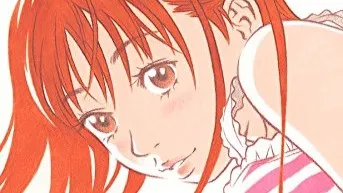
Eisaku Kubonouchi
The two men behind a dream collaboration speak about the life of drawing manga!
Following the “Hungry Days” crossover commercial series with Nissin’s Cup Noodle, we sit down with Eisaku Kubonouchi! In addition to behind-the-scenes details of creating the commercials, we”ll get to hear what these two men who gave given their lives to manga have to say!
Moderator: We’re sitting down today with Eisaku Kubonouchi Sensei, who handled the character design for the Nissin Cup Noodle/One Piece “Hungry Days” commercial series.
Kubonouchi: Thank you for having me.
Oda: It’s a pleasure.
Moderator: First of all, can we have your thoughts on the finished commercials?
Kubonouchi: There wasn’t much time to do these, so there was a lot of patience and persistence on the part of the animation staff and directors, and the quality is very high across the bar. I think everyone did a great job.
Oda: All I can say is that I love them. When I heard about the commercial offer, I went back and reread your Tsurumoku Bachelors’ Dorm series, and reminisced a lot.
Moderator: When the collaboration was finalized, what was your impression of One Piece, Kubonouchi Sensei?
Kubonouchi: To be perfectly honest with you, I hardly ever read manga. I hardly ever watch anime. But of course, I did know about One Piece, and the general worldview and vibe that it has. I’d just never actually read it. So when I got the commercial offer, I kind of panicked. I thought, “Can I really draw this?” One Piece is still very much an ongoing affair, and it’s the best-selling manga in the entire world. So my first thought was, “Oh crap, I can’t touch this one!”
Oda: I love creating characters. And I love designing characters. But I make so many of them that I have trouble giving them clear roles after that.
Kubonouchi: Do you draw up design documents while you’re working on the series?
Oda: I don’t do proper design sheets. I just whip up some rough sketches, and usually finalize them when I’m first drawing them in the manga.
Kubonouchi: Does that mean you’re just memorizing the form and details of the character as you go?
Oda: No, I don’t memorize them. Over time, I’ll remember the main characters I have constantly in action, but when there’s a whole bunch of characters doing stuff at once, I’ll go back to the rough sketches and materials to refresh my memory.
Kubonouchi: I guess that makes sense, when you have so many characters to deal with.
Oda: Whenever I draw them from memory, thinking I’ve got it down right, that’s when things go wrong. I’ll forget about scars on faces or bodies, stuff like that. It happens so often, it’s easier just to check from the start.
Kubonouchi: Ahh, interesting. I was noticing that the outline of One Piece characters tends to be either human or monster in style, and the monster-type characters often have a Tetsujin 28 outline. Do you like that sort of silhouette?
Oda: I come up with the character forms based on various childhood memories.
Kubonouchi: I see. It’s a bit old-fashioned, in a way, that you’ve got so many characters with that kind of silhouette to them. As I was drawing up the characters, I kept noticing that. “Oh, he must like this look.”
Oda: There are a bunch. I think you’re probably correct about that.
Kubonouchi: Really? Overall, there’s just such a great variety that it was really fun to work on characters with such different physiques, especially the most extreme monster-type ones.
Oda: You guys drew so much, to the point that you can’t tell how much is the animators and how much is you, right?
Kubonouchi: That’s right. Basically, the director always wanted more retakes (laughs).
Oda: That sounds really rough…
Kubonouchi: The production company was straining under the workload as it was, but I gave instructions as detailed as I possibly could. If the animated art is too different from my own style, then it’s like, “Why am I even doing the character design?” I feel like animators are too locked into contemporary anime styles, so designs tend to get converted into that look. I call it “anime laundering.” They just can’t help but redraw things into a style they’re more comfortable with. And then there’s no point to having me design them, so it’s like, “Why not just draw them in a typical moé anime style, then?” So I drew as many characters as I could and did my best to explain the details to the animators, so that my presence had a purpose. I did as much of the rough drawing before the key animation as possible. In the Vivi-centric commercial, the animators just couldn’t get her downcast expression to look like my art, and the director ordered lots of retakes. That one came down to the wire.
Oda: So the director and animators were really focused, then. They wanted to do whatever it took to incorporate your art.
Kubonouchi: I think so.
Oda: And that’s got to be difficult when you’re talking about characters with skeletal structures that have no precedent.
Kubonouchi: My art looks like it would be easy to mimic, but from what people tell me, it’s surprisingly hard. Outside of these commercials, I’ve done character design on anime a number of times before, and it always causes trouble for the animators.
Oda: In what way?
Kubonouchi: Let’s see. I have a unique way of using the lines themselves, and I use a lot of negative space. Apparently, you can’t really do the same thing with anime.
Oda: I see. So there are manga techniques you can’t use in anime…
Kubonouchi: In anime you can’t really vary the line weight the same way. Also, lots of animators don’t actually sketch out the facial structure and stuff first. In my case, I’m envisioning that before I draw, so differences often arise from that. When you’re doing distorting poses like looking up or looking down, there’s a difference between people who can sketch skeletal structure and those who can’t. I think that’s a big part of it.
Kubonouchi: I’ve been thinking all along, as I read the volumes of One Piece, that you must put a lot of work into that.
Oda: I draw everything that moves.
Kubonouchi: Even the little things in the backgrounds, and the smudges, and so on?
Oda: That’s right. Things that affect the presentation affect the story, so if I had someone else doing the movement of the wind or the angle of the snow, it’s going to turn into something a bit different than what I’m thinking of.
Kubonouchi: Because it will be different.
Oda: My staff wanted to help once, and asked, “Why can’t we draw the snow?” So I tested them and said, “Go on and draw it, then.” But it was still different than what I wanted to express. So I was like, “See the difference?” and they said, “Oh, I get it now.”
Kubonouchi: Exactly. That’s the dilemma.
Oda: And depending on the individual panel, the way the snow or rain is falling might depend on how I’m feeling at that moment, or has to reflect the way the characters are feeling. It’s a subtle thing. Maybe most of the readers wouldn’t even notice it…
Kubonouchi: No, they will, they will! I’m sure they do.
Oda: Do you think so?
Kubonouchi: I was that way too. I’d let them draw the minimum necessary amount of background detail, but then I’d go in and smudge it up, draw extra shadows, and so on.
Oda: You are very particular about the backgrounds.
Kubonouchi: I did all of the moving parts myself. And when I had my assistants do the speed lines, and it wasn’t right, I’d just do that myself too. I wanted to do as much of it as possible, so when I saw the volumes of One Piece, I knew, “Oh, man, Oda’s going through so much trouble to do this.” I can’t believe you’ve done this weekly for twenty years.
Oda: That’s right. It’s a lot of work, but told the readers, “I draw everything that moves, even the snow and rain”, so I can’t break that promise now.
Kubonouchi: Oh, it’s a promise, is it? (laughs)
Oda: I figure I just have to keep doing it this way.
Oda: When I read Tsurumoku Bachelors’ Dorm, I thought, “The guy who drew this must have lived through so much romance.”
Kubonouchi: Actually, not at all. I went to an all-boys technical high school, so girls were, like, in a completely different world. When we opened up the campus for the culture festival and the girls came in, I remember being really nervous. So I didn’t really have the same kind of youth experience lots of other people did. And then I got a manga series when I was 21, and was basically living entirely in my studio from that point on.
Oda: I see. Once I started my series, I realized that I couldn’t have anyone around me.
Kubonouchi: Yeah, I definitely get that. In my case, I’m drawing cute girls and beautiful women because I never got to experience those bittersweet things when I was young, so I have a stronger longing for them. Even now, at my age.
Oda: Like, you want to get that youth back?
Kubonouchi: Yeah, I’m like, “I still want to experience love!” That’s creepy when you’re in your fifties (laughs). Anyway, that’s a kind of creative drive I have. So when I’m riding on the train or whatever, and I see a beautiful woman, I don’t do anything, but I just watch, and let my imagination come up with various scenarios.
Oda: So you make your romantic stories through imagination? Not personal experience?
Kubonouchi: If I based it on personal experience, my story would be over in three volumes (laughs). Basically, I just imagine, if that were my younger self in that situation, what would I have done? Let’s say that I spot a girl and a boy walking together. And the boy’s just a little bit ahead, and she’s holding on to the sleeve of his shirt. That’s enough to make me think about the story. Like, what’s going on there? Did she start holding his sleeve from the beginning? Or is she holding the sleeve because she’s not able to hold his hand yet? I envision different scenarios and romanticize them in my mind like a weirdo in the corner (laughs).
Oda: While I was reading Tsurumoku Bachelors’ Dorm, I was thinking to myself, the romantic balance of all the characters is so incredible. You can manipulate this character in this way and have them fall in love. And it’s so natural, and doesn’t feel cynical. I thought, “How does someone so young write this so well?”
Kubonouchi: At the time, I was just twenty-two or twenty-three. It basically just comes down to love for the characters. Even when I created characters with a kind of twisted sense of love, like Reiko Shiratorizawa…
Oda: It’s amazing that even her journey feels earned.
Kubonouchi: For her, well, this was back in the days of the economic bubble in Japan, and I saw a girl like her at a pub.
Oda: Really! (laughs)
Kubonouchi: Yes. This was a really long time ago. I heard someone going on and on, saying, “The thing about love is,” in the way characters talked in the youthful romantic dramas that were popular at the time. I looked and saw this girl who had a really distinctive facial shape, and I thought, “You’re the love expert?” Back then, I thought the attitudes of the bubble period were really distasteful, so Reiko Shiratorizawa was a kind of ironic response to that. But the more I drew her, the more I thought, “Actually, she’s kind of sweet.” And I realized that if I treated her like a weirdo and gave her a misfortunate ending, it would leave the readers with a bad aftertaste. So partway through the story, I thought, “I have to give her a happy ending.” I knew I was going to pair her up with Sugimoto, the handsome guy.
Oda: So you were figuring it out as you went.
Kubonouchi: I tinkered with the finer details as I went, to make sure it led to the scene I wanted in the end.
Oda: I think a normal artist would never think this character’s a joke, but you managed to give her a real, fulfilling romance that the readers can appreciate and accept! You can only do that if you have real love for your characters.
Kubonouchi: Yes, exactly! I think it all comes down to loving your characters. I think it’s the same way for you too. When I see your scenes that have a real emotional punch to them, I think, “Oh, he must have been crying as he drew this.”
Oda: I cry when I draw them.
Kubonouchi: I knew it. You can really feel it. Like in the scene when Robin’s crying.
Oda: When I read other manga or watch movies, I don’t cry. It’s really difficult to cry. So I can’t submit a chapter until I’m able to get myself into the headspace to cry, for whatever the reason — even if it’s just because I’m exhausted from lack of sleep. If I can’t make myself cry, how can I expect the readers to? I’ll think, “There’s still something missing,” and keep redrawing it.
Kubonouchi: That’s phenomenal.
Oda: When I have a really great image in my mind, but it’s just not coming together right on the page, that’s when I really spend time on the storyboards. That’s the real hump. Once I’ve got my storyboards, I only have to draw them. I’m pretty confident in how quickly I draw, so even if there’s no time, I’ll say, “No, I can make it.” It’s coming up with the story stuff that’s the tough part. I’m not necessarily waiting for inspiration to strike—but it does take time.
Kubonouchi: I think I and many other artists are the same way, in that we think, if we’re crying as we draw, so will the readers. There’s a way that we share emotions through paper and art, and if you’re just drawing on the surface level, they’ll see through it. If you’re thinking, “Oh, this’ll make ’em weep,” they won’t care. Instead, they’ll cry if you’re thinking, “This is where I’ll cry!” And when you’re thinking, “This is so funny!” that’s when they’ll crack up. It all comes down to how much you’re lying to your art paper in front of you. I think not lying to your art and your manga is the most fundamental tool for success in this business.
Oda: I get that.
Kubonouchi: It’s really incredible. I could feel just what kind of emotion you were using to draw these big character moments, just from the touch of your pen. It’s why I had to work so hard to capture it.
Oda: Thank you very much. I’m glad to hear that.
Kubonouchi: I’d say that you’ve got a taste that’s been built up since your early childhood, that’s been in these kinds of old-fashioned styles and silhouettes that are scattered among all the many characters you create, and they all add up into one cohesive visual design and style that is entirely yours.
Oda: Thank you.
Kubonouchi: Do you use a G-pen to ink your pages?
Oda: Yes, G-pen.
Kubonouchi: You’ve got a particular feel with it.
Oda: Do I? I wouldn’t really know.
Kubonouchi: I think your line work has incredible flavor to it. There are shape that might feel incredibly out of date if they were drawn just the tiniest bit differently, but you bring them such a zest. I’ve felt that for a while using your art as a reference for these commercials. I think you’ve incorporated some extreme styles from past generations that kids these days aren’t familiar with, and it allows you to produce all of these varied characters that are still unified by the “Oda touch.” It’s why it feels so cohesive overall. You have characters with such distinct and different visual values when you distill them down, and yet you can have them all in the same image and none of them feel out of place. That’s how strong your style is.
Oda: Thank you. I will say that cohesiveness is something I’m very conscious about. I wonder about how other artists handle different-looking characters. In a manga sense, it’s more fun to have a wild and wacky variety, but I’m really careful not to ever come away thinking, “This is a character that came out of a different manga.” Although I don’t consciously know exactly how I’m doing that adjustment.
Kubonouchi: So then you’re probably doing it unconsciously.
Oda: You suppose? I do adjust the balance of the character until I feel like they fit.
Kubonouchi: Whether consciously or not, you have the ability to do it. You can have a new character next to an old character, and there are no weird discrepancies between them. Because whatever rules you have that govern your style have been consistent throughout. I bet your readers intuitively pick up on that. It’s the flavor the series has. I think One Piece is remarkably well done in that respect.
Oda: Thank you. As for you, I feel like you’ve got a kind of painterly sense to you, but I don’t know where it comes from. Would you say you’re influenced by pop art?
Kubonouchi: Oh, yes. I’ve been influenced by that stuff since I was young. But I also love ukiyo-e.
Oda: Really? You do?
Kubonouchi: I just love Hokusai Katsushika and Hiroshige Utagawa.
Oda: I’m surprised by that. But it’s definitely true that they’re incredible.
Kubonouchi: I especially love Hiroshige, and the way he constructs his visuals is actually very pop for the time. Hokusai is more the type who wants to overwhelm you and blow you away, but Hiroshige’s very gentle, very pop, very fashionable.
Oda: It’s really impressive to me that you can look at art that old and describe it as “pop.” I’ve never seen things that way, although I will get blown away, of course. I went to a Hiroshige exhibit once, and I was actually a little crushed on the way home. He was just too good.
Kubonouchi: Yes. That linework is immaculate. In that sense, I think he’s in exclusive territory on a worldwide level.
Oda: But you saw it as pop art and didn’t feel crushed by his skill. I suppose that’s just the eye that you have for it.
Kubonouchi: Go back and look at The Fifty-Three Stations of the Tokaido. It’s so pop.
Oda: Really? (laughs) Your sense for artwork is really something else, Kubonouchi Sensei. Tsurumoku Bachelors’ Dorm might be an old manga by this point, but it’s still well worth reading now. I think you’ve got a universal style that never gets old.
Kubonouchi: Thank you.
Oda: I think that’s how you still resonate with young people today at your age. You’ve got a timeless sense of artistry.
Kubonouchi: Thank you. Wow, I’m so embarrassed. (laughs)
Kubonouchi: Well… this was really great, getting to sit down and talk with you like this. One of my oldest friends is a stylist, and they’ve been reading Weekly Shonen Jump forever. About 20 years ago, they said to me, “You should see this new series, One Piece, it’s just fantastic.” I still remember that. Normally I’d just shrug it off and forget about it, but I still remember that conversation today.
Oda: The things people say are important. The things that travel furthest are the words of your friends.
Kubonouchi: That’s true. Sometimes the most casual words from someone close to you have the greatest element of truth to them. I’ve heard so many great stories today, now I can go back home to the country and brag to my friend about them (laughs). I’m sure they’ll be very excited.
Oda: Thank you. I had fun, too.